Sales Are Up, Guests Are Down: How Neighborhood Restaurants Win the Visit | Hybrid Storytellers
The Weekly Table, No. 01. One number a week that restaurant owners can't ignore, what it means for a Pittsburgh-sized restaurant, and the play.
Restaurant sales were up 1.8% in June. Guest traffic was down 1.9%. Read those two numbers together and you get the whole story of 2026: fewer people are walking in, and each one is paying more.
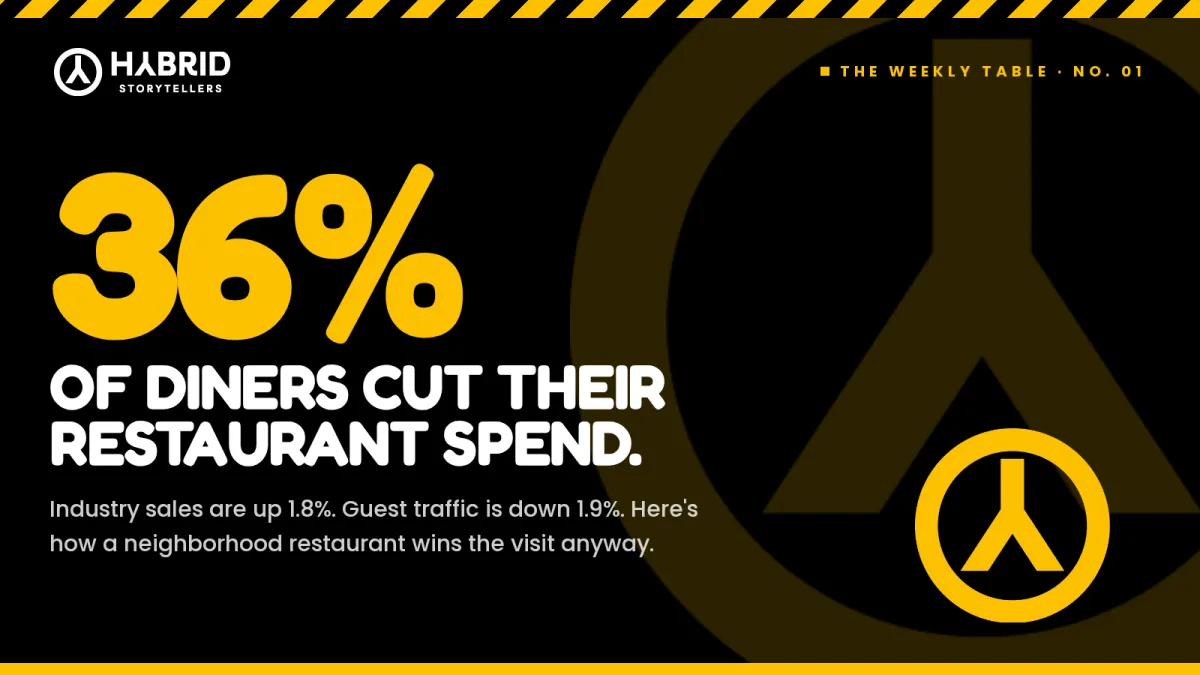
That's fragile growth. Price is carrying the number, and the National Restaurant Association's latest consumer survey says 36% of consumers already cut their restaurant spending last quarter. About a third traded down to cheaper places, and 35% skipped the add-ons, the dessert, the second drink.
At a 60-seat neighborhood spot, "fewer guests" is one lost visit a month from your regulars. Across 400 regulars that's roughly $12,000 in covers gone before you ever notice a slow night on the floor.
Here's the part that matters, and the reason we're not writing a gloomy post: 56% of people still ate out last week. Half ordered takeout. They haven't quit restaurants. They're choosing harder. When a guest has fewer nights out to spend, the place that wins is the one they choose on purpose, not the one they stumble into.
Three plays win the visit. None of them require new software.
Play 1: Show the food, everywhere they're deciding
Most of the choosing now happens on a phone at 5:40 on a Thursday, on Google Maps and Instagram. If your Google Business Profile still shows a two-year-old photo of the awning and your last Instagram post is a flyer, you've lost the decision before they've looked at the menu.
What works is simple and relentless: real photos and short video of the dishes people actually order, refreshed every month, posted to Google as well as Instagram and Facebook. Not one big shoot a year. A steady rhythm. When we started shooting and posting monthly for The Turn Club in Cranberry, their Google views climbed past 184,000 and monthly site visits went from about 3,000 to more than 14,000. Same kitchen, same menu. People could finally see it.
Play 2: Give your regulars a reason, through a list you own
A third of diners traded down last quarter. Your regulars are deciding between you and the cheaper place down the road, and a coupon on a marketplace app isn't going to swing that. A message from you will.
The owners who are holding traffic have an email and text list of their own guests and use it for something worth opening: a Tuesday special for regulars, a first look at the fall menu, a "bring a friend" night. Emiliano's Mexican Table grew its list to more than 1,500 subscribers and turned it into 464 in-store redemptions in three months. Those are visits that would have gone somewhere else.
Play 3: Make the website you already have do the work
When someone decides to come in, the decision should end on your site: current menu, correct hours, a reservation or an order that goes straight to your kitchen. Not a PDF menu from last spring. Not a third-party page that takes a cut of your own regular's dinner.
You don't need a new platform to do this. A well-built Squarespace or Shopify site, connected to the point-of-sale you already run, with the menu and hours kept current, is enough. The boring stuff, done consistently, is what turns a search into a seat.
What this looks like at a real restaurant
Sophia's in Coraopolis had a loyal local following and almost no online presence. We didn't add a single piece of software. We photographed the food, built a content rhythm, ran small targeted ads to the neighborhoods that matter, and kept the site and Google profile current. New guests, week over week, and a general manager who told us "our food has never looked so good."
That's the whole system: offers that convert, a site that gets found, and traffic that turns into guests. It's built in the first month and then run every month after, and it's the reason we can put a number on it: 500 new walk-ins in 90 days, or we keep working until it's there.
The number to watch this week
Not sales. Guest count. If your sales are flat-to-up and your cover count is down, you're growing on price, and price runs out. Pull last month's covers against the same month last year. If it's down, the three plays above are where the visits went.
Sources: Black Box Intelligence, Restaurant Industry in Review, June 2026 (comparable sales +1.8%, comparable traffic -1.9%). National Restaurant Association, Quarterly Consumer Insights Survey, Q2 2026 (June 2 and 3, 2026).
Ryan Hreczkosiej is the founder of Hybrid Storytellers, a Pittsburgh restaurant marketing agency. If you'd like to see how the system would work in your restaurant, book a free 30-minute strategy call.