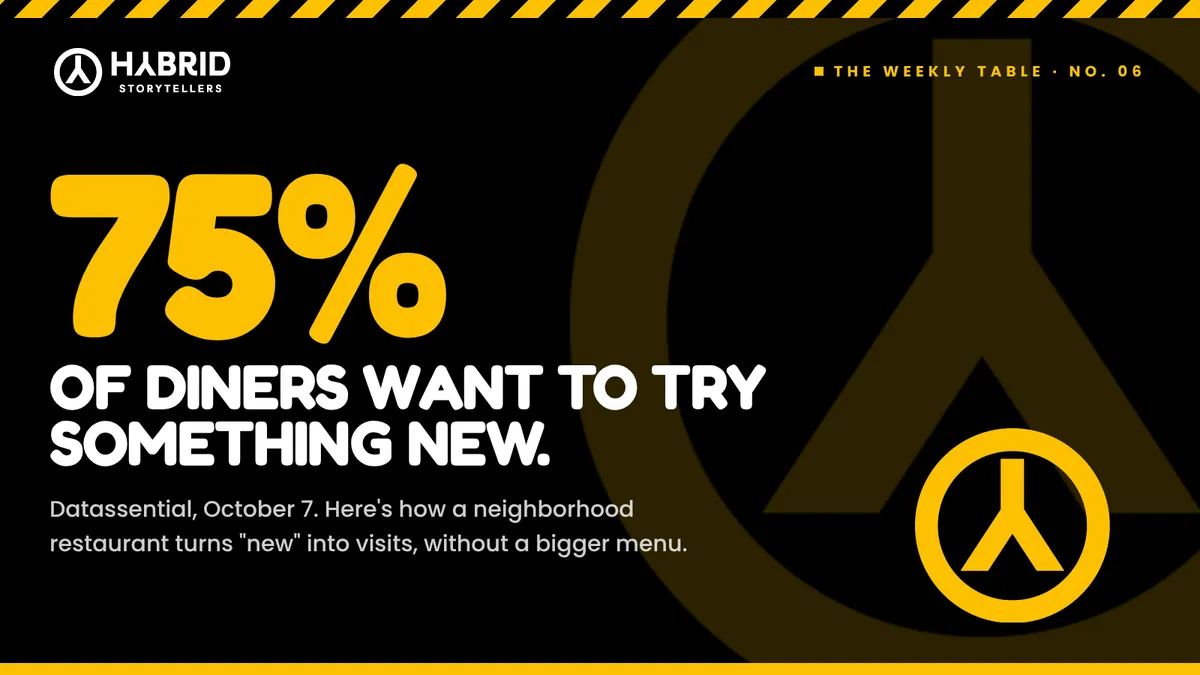
75% of Diners Want Something New | Hybrid Storytellers
The Weekly Table, No. 06. One number a week that restaurant owners can't ignore, what it means for a Pittsburgh-sized restaurant, and the play.
75% of consumers say they're looking forward to new food and beverage trends heading into 2027. That's from Datassential's 2027 trend predictions, released October 7, built on more than 20 years of menu and consumer data. The same report found 70% of consumers feel optimistic about the year ahead.
Read that against the mood in the dining room. The Post-Gazette spent October 13 explaining why eating out in Pittsburgh costs what it does, under the headline "Profitability is down quite a bit." Every owner we talk to is managing the same squeeze, even as the National Restaurant Association's September performance index, out October 30, hit its highest reading since February and 40% of operators said they expect higher sales by spring. And yet three out of four guests are telling the research firms the same thing: show me something I haven't had.
The chains heard it first. Technomic reported this summer that new menu item introductions are up 13% in a year and 134% over five years. Every national brand is launching, testing and re-launching, because "new" is the cheapest reason there is to walk through a door you've walked through before. And the appetite is specific. Datassential found 58% of U.S. consumers want to try Mexico City-style cooking, 75% of millennials, and 49% want to try a pambazo but never have. People aren't just open to new. They're waiting for it.
Here's the part that matters for a 60-seat room in Pittsburgh. You can't out-launch Chili's. You don't need to. A chain needs six months and a test market to add one sandwich. You need a Tuesday afternoon and a chef with an idea. The restaurant that puts one new thing in front of its regulars every month, and makes sure they see it, is running the chains' playbook at a fraction of the cost. The trap is quieter than you'd think: most independents already change the menu. They just never tell anyone.
Three plays, no new software.
Play 1: Make "new" a monthly event, and shoot it
Pick a cadence and name it. First Friday, chef's table, the seasonal plate, whatever fits the room. Then treat every launch like a launch: a proper photo of the dish, a 15-second clip of it being plated, and a line from the kitchen about why it's on the menu. That runs on Instagram and Facebook, goes up as a Google Business Profile post the same day, and sits at the top of the site menu. One dish, one shoot, five placements.
At The Turn Club, the Chef's Choice close-ups are the posts that lead the account every time they go up. Nothing about them is fancy. They're a dish, shot well, with the chef's name on it.
Play 2: Tell the people who already like you first
New items sell to regulars before they sell to strangers. The 75% who want to try something are mostly people who already have a place they like and want a reason to go back. So your owned list goes first. One email or text the morning the dish drops: photo, two sentences, "here through the 30th." Add a small offer if you need the nudge, a free side with the new plate or a pairing price, but the news itself is usually enough.
At Cooked Goose Catering, the Goose Express plate posts, a rotating menu, pulled 1,200 to 1,300 engagements apiece this fall without a dollar of boost behind them. People share what's new. They just need to be told it's there.
Play 3: Put the new thing where people are searching
The 58% who want to try Mexico City cooking aren't searching "Mexico City cooking." They're searching "Mexican near me" and clicking the profile with the freshest photos. Your Google Business Profile is the front door for that search, and profiles that change get looked at. Add the new dish to the menu section, post it as an update, and keep the hours right. If you want to spend a little, a targeted local ad within a few miles of the door, pointed at the new item and the people who've visited your site, turns the launch into traffic for a few hundred dollars.
Emiliano's Mexican Table is the clearest case we have. When the restaurant reopened and rebranded, the story posts about what was new pulled 800 to 2,100 engagements each. Product-only margarita shots over the same stretch pulled single digits. Same account, same audience. The difference was that one told people something had changed.
That's the system we run for clients: a shoot every month built around what's new, social content that treats every launch like a launch, a Google profile that stays current, a list the restaurant owns, and a site on the POS it already uses. The point isn't a bigger menu. It's a reason to come back.
The number to watch this week
Days since you last told your guests something was new. Not since you changed the menu, since you told them. If the answer is more than 30, pick one dish, shoot it with your phone this week, and put it on Instagram, Google and your list on the same day. Then watch what the regulars do. Three out of four of them have been waiting for exactly that.
Sources: Datassential, 2027 Food, Flavor & Beverage Trend Predictions, released October 7, 2026: 75% of consumers say they are looking forward to new food and beverage trends; 70% are optimistic about the year ahead; 58% of U.S. consumers (75% of millennials) are interested in trying Mexico City (CDMX) cuisine; 49% are interested in trying pambazos. Technomic, reported by Nation's Restaurant News, July 21, 2026: new menu item introductions up 13% year over year and 134% over five years; food and beverage quality is the top factor in choosing where to eat. Pittsburgh Post-Gazette, "'Profitability is down quite a bit': Patrons to restaurateurs, everyone is feeling the cost of dining out," October 13, 2026. National Restaurant Association, Restaurant Performance Index for September, released October 30, 2026: index 100.7, highest since February; 40% of operators expect higher sales in six months. Client figures from Sprout Social reporting, August 5 to October 6, 2026.
Ryan Hreczkosiej is the founder of Hybrid Storytellers, a Pittsburgh restaurant marketing agency. If you'd like to see how the system would work in your restaurant, book a free 30-minute strategy call.